In this post I will continue to dissect my creative process. But this time I will focus on when I work for others. I will concentrate on a recent assignment that I did for The New York Times, for a series of news stories about how China became a superpower, called China Rules (Pan et al, 2018). The stories published November 18 online and a week later in print.
In this case, the creative process started with a briefing from word editors that were working on the narratives. They described to me what the stories would be about. My task was to help create a coherent visual identity between the different stories.
The first thing that I needed to get started was to read the story drafts. Or, at the least, I needed to have a very detailed description of each story. This is the first key difference from my personal work, which starts with observation and no need of words.
The second step was thinking/creating/solving the problem of identity. That is when I had the idea of creating a family of icons, which then evolved into a series of illustrations.
The third step is actually representation/drawing. This phase coincides with the personal work that I presented in the previous post: Walking like a New Yorker. Figure 1 below has several initial sketches.
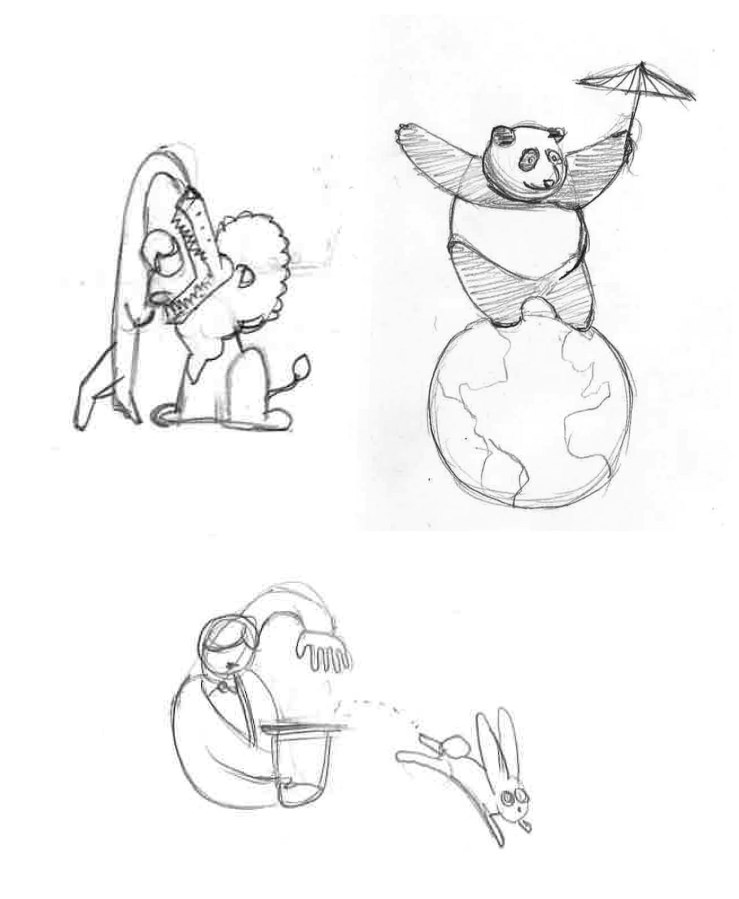
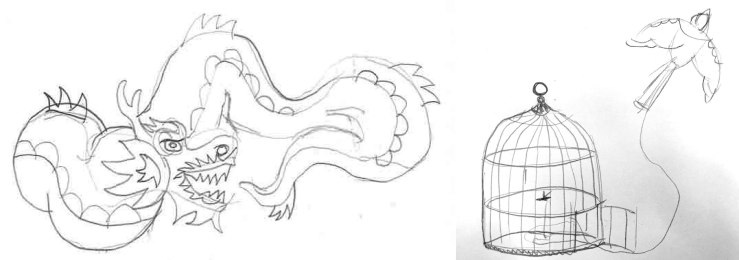
The fourth step is showing my sketches to my editors, designers and other people working on the series. At this point, my work is subject to a editorial filter. Depictions of panda bears and dragons were considered inappropriate.
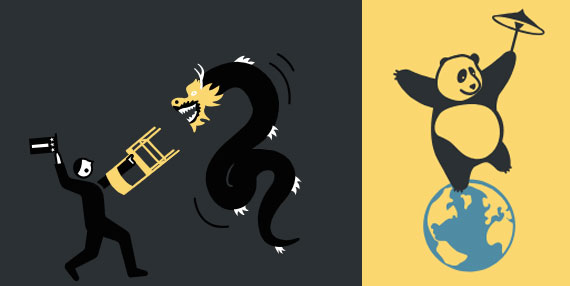
The fifth step is improving the illustrations. according to the editorial filter. To improve it, I work directly with the titles of the stories. It helps me match the illustrations to the words, as seen in figure 5, below.
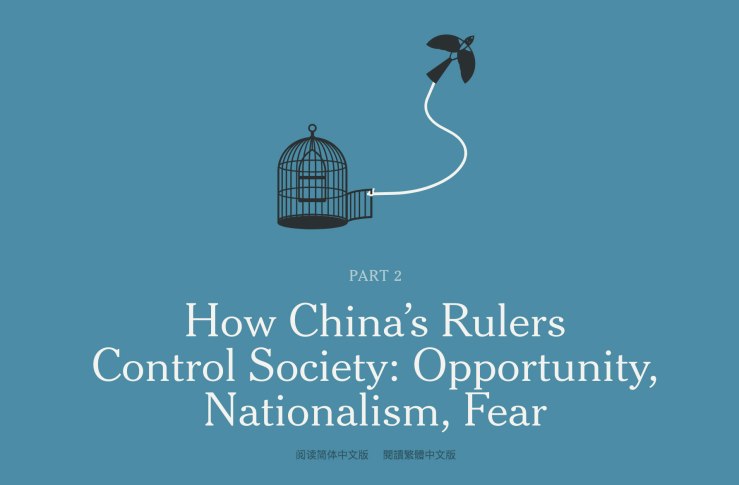
The sixth and final step of the creative process is publishing. Figure 5 shows how one of the illustration appears on The New York Times website.
Conclusions:
- The project on China Rules began in May 2018. However, it was interrupted for a few months. Several stories were reworked and, as a result, many drawings had to be redone in the week before publication.
- In this particular case (work), the illustration is more functional than when I work for myself, where it can be a sort of personal expression.
- The great takeaway, for me, reinforces the words of the American cartoonist Jeff MacNelly, that the best thing for his creative process was a deadline (Adelman, 1991).
- A key takeaway for me is that I will become more productive if I create a mechanism that mimics the strict deadlines that I get from clients when I am working for myself.
*
References:
ADELMAN, K. (1991) ‘Quick Draw.’ The Washingtonian. [Online] May 1991. Available at: https://www.washingtonian.com/2015/06/12/jeff-macnelly-interview/ [Accessed on Dec. 5, 2018.]
PAN, P. et al (2018) ‘China Rules.’ The New York Times. [Online] Nov. 18, 2018. Available from: https://www.nytimes.com/interactive/2018/11/18/world/asia/china-rules.html [Accessed Nov. 20, 2018]
PEÇANHA, S. (2018) Illustrations for ‘China Rules.’ Unpublished.
PEÇANHA, S. (2018) Illustrations for ‘China Rules.’ The New York Times. [Online] Nov. 18, 2018. Available from: https://www.nytimes.com/interactive/2018/11/25/world/asia/china-freedoms-control.html [Accessed Nov. 20, 2018]


