One of the most widely recognized authors of picture books for adults is the Israeli-born American illustrator Maira Kalman. During the course of this masters program I will examine her work and try to get a better understanding of the tools she uses to create the poetic feeling in her stories.
Kalman wanted to be a writer. But shortly after finishing college, she realized that she was unhappy with the quality of her writing and decided that she would be better off if became an illustrator. Now, after a dozen of children books and a couple of years as a visual columnist at the New York Times, her naive style has become famous around the world.
In TED2007 The Illustrated Woman (2007), Kalman talks about her approach to storytelling. ‘I don’t think differently for children than I do for adults. I try to use the same kind of imagination, the same kind of whimsy, the same kind of love of language,’ she said.
‘So, in writing for children, it seems simple, and it is. You have to condense a story into 32 pages, usually,’ Kalman said. ‘And what you have to do is, you really have to edit down to what you want to say. And hopefully, you’re not talking down to kids and you’re not talking in such a way that you, you know, couldn’t stand reading it after one time.’ Figures 1 to 4 show some of Kalman’s illustrated books targeting children.


Her handwriting also helped to set her style apart. Figures 5 and 6 are some of Kalman’s work for adults. She applies in her books for adults the same naive style that she uses in her work for children. But she added a lot more words to it. Here are some samples of her work directed to adults in her column at THE NEW YORK TIMES, And the Pursuit of Happiness.


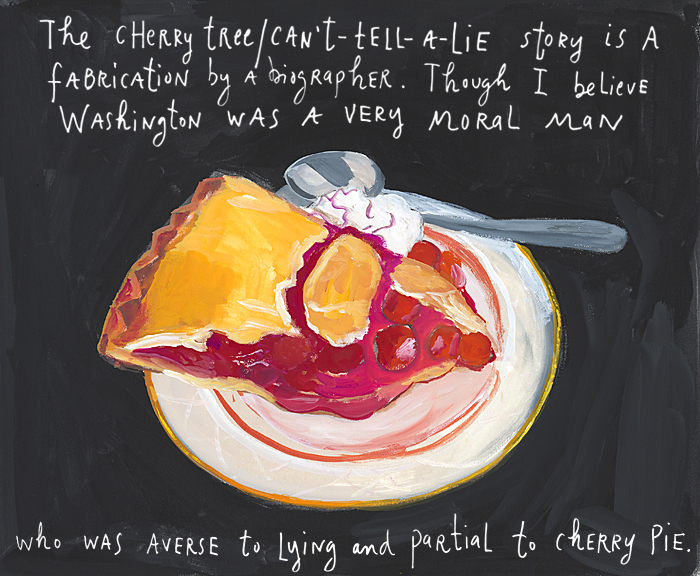
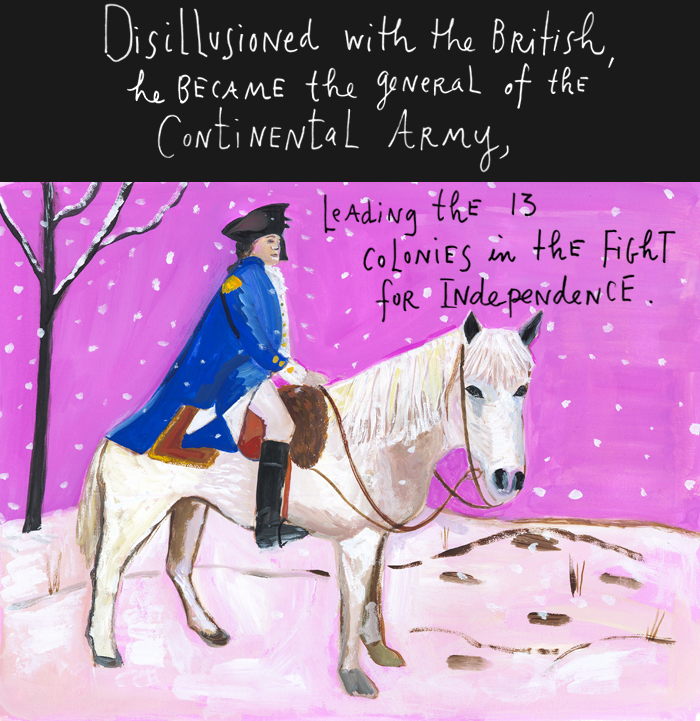
Kalman also played with taking photographs and sometimes writing or drawing on top of them. ‘The books are really journals of my life. I never — I don’t like plots. I don’t know what a plot means,’ Kalman said in her talk.


‘I can’t stand the idea of anything that starts in the beginning, you know, beginning, middle and end,’ Kaman said. ‘It really scares me, because my life is too random and too confused, and I enjoy it that way.’
In TEDxMet: Icons – Maira Kalman (2013), Kalman gave yet another important insight to her approach to making picture books. ‘I was doing things that were narrative and naive because I thought: “this is my way to write. I’m going to write by painting.’’
The mix of a naive illustration style with stories that often appear to be non sequitur help to make many of Kalman’s adult picture books feel approachable and serendipitous. Part of her charm is that her stories sometimes feel like poetic annotations, but ultimately don’t seem to intend to be much more than her personal visual diary.
*
References:
KALMAN, M. (2009) By George. [Online] Dec. 31, 2009. Available from: https://kalman.blogs.nytimes.com/ [Accessed 23 October 2018]
TED2007, IDEAS WORTH SPREADING (2007) The illustrated woman [Online video] March 2007. Available from: https://www.ted.com/talks/maira_kalman_the_illustrated_woman %5BAccessed 23 October 2018]
TEDX (2013) TEDxMet: Icons – Maira Kalman [Online video] Oct. 19 2013. Available from: https://www.ted.com/talks/christoph_niemann_you_are_fluent_in_this_language_and_don_t_even_know_it [Accessed 23 October 2018]
 Sergio’s research & enquiry