I was drawn to examine the work of the British artist David Shrigley for the quality and wit of his art, but also for his productivity. Shrigley is one of the most prolific authors of picture books for adults today. His work also includes paintings, cartoons, sculpture, photography and music. Analyzing some of his methods offered me useful lessons about how an artist can become so productive.
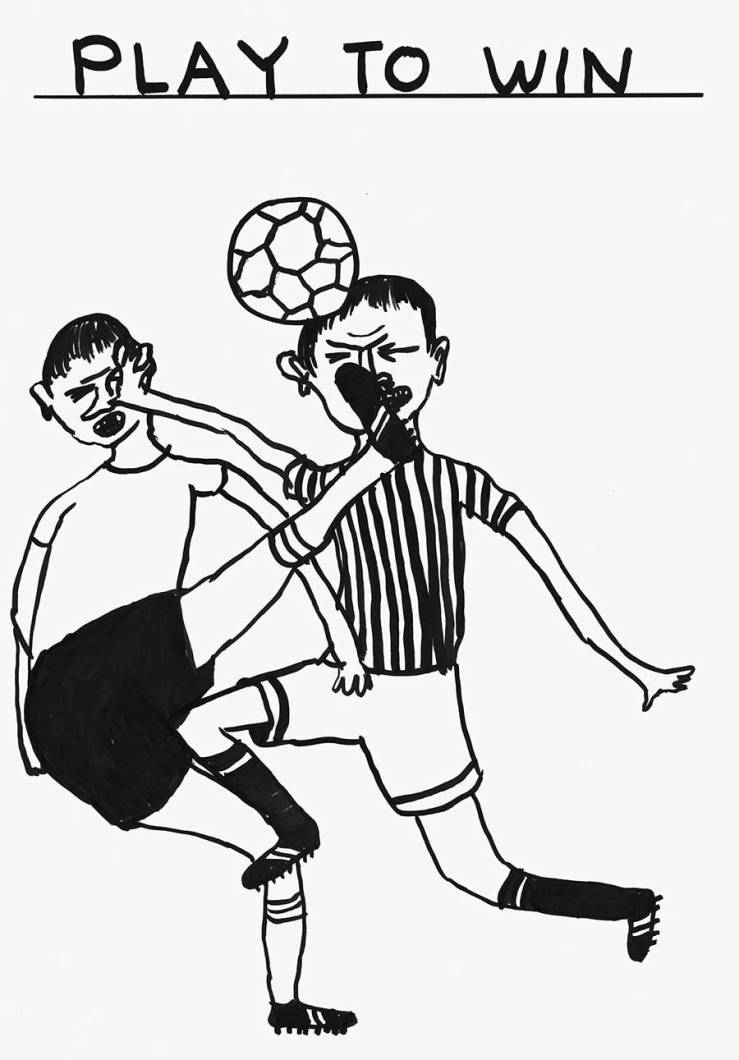
In many ways, Shrigley’s work looks and feels like sketches. On one hand, he cherishes the kind of rudimentary drawing that emerges in most of us naturally, before any art education. On another hand, the sketch appearance is a reflection and a consequence of his approach: Shrigley doesn’t spend much time refining or redoing his drawings.


On a video interview with Louisiana Channel (2016), Shrigley talked about the importance of producing more more work than he actually intends to publish. ‘Thirty or forty percent of it is retained and then the other 60 or 70 percent is thrown away,’ he said. The work is finalized mostly during the editing process.
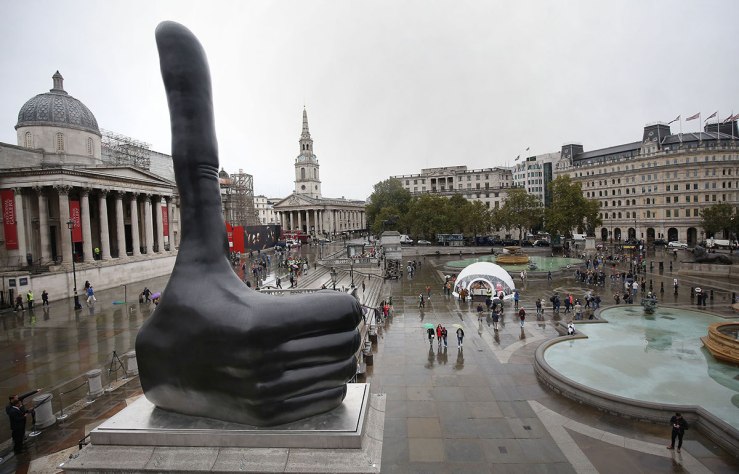
Producing in more work than he plans to use allows his ideas to flow. To him, the excess work sets him free. ‘Because you always feel that the chances are the drawing your making at a particular time … is probably going to end up in the garbage, so that sets you free to do whatever you like and don’t worry about it,’ he said.
This is a different approach from what is taken by other relevant artists, like Christoph Niemann, for example. In TED2018 You are fluent in this language (and don’t even know it) (2018), Niemann said that his process starts with a concept. After defining a concept, he uses a range of styles to finish and convey the idea. Niemann’s approach is often similar to that of a graphic designer. Shrigley’s approach, on the other hand, is more similar to those of other cartoonists.
During the Louisiana Channel (2016) interview, Shrigley also described two techniques he often uses, that could help increase his productivity. One of them is to create lists of things that he wants to draw. He draws first and adds words later. Another technique is the opposite way: words first, drawings later. ‘I’m trying to make drawings that don’t illustrate text and text that doesn’t describe the image,’ he said.
-
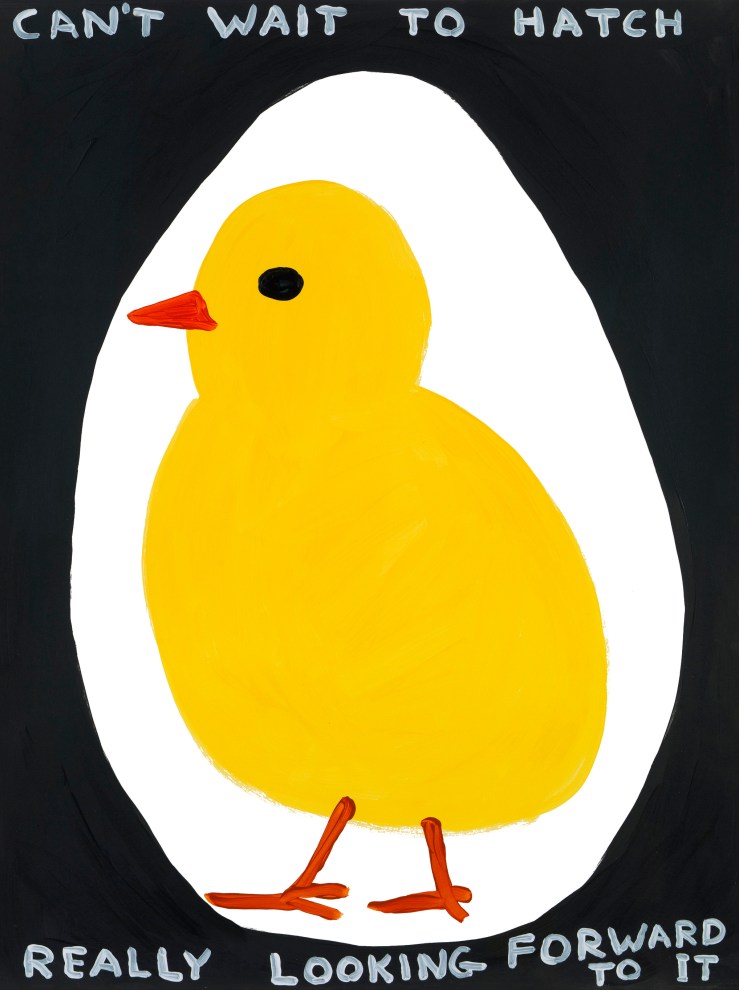
Figure 7. A painting by David Shrigley, with words loosely related to the drawing.
Based on his interview and on an analysis of his work, we can determine a number of factors contributing to Shrigley’s productivity: 1. The simplicity of his drawing style. 2. The looseness of the way he works, planning to produce more artwork than what he intends to publish. 3. His methodical approach, like the lists that he creates of things that he wants to draw. And 4. his regimented work hours. He says that whether he is inspired or not, he will put himself to work. ‘If you put the hours in, the work will make itself. That’s my experience of it anyway. If you don’t put the hours in, the work is much more difficult,’ Shrigley said.
References:
LOUISIANA CHANNEL (2016) David Shrigley Interview: Everything That is Bad About Art [Online video] Aug. 20, 2016. Available from: https://www.youtube.com/watch?v=24rovlfXqo4 [Accessed 6 November 2018].
SELF, Will (2013) David Shrigley: ‘I gave my book out at the pub – that’s how it all started’. The Guardian. [online] 18 Oct. 2013. Available from: https://www.theguardian.com/artanddesign/2013/oct/18/david-shrigley-book-pub-started [Accessed on Oct. 30, 2018].
SHRIGLEY, D. (2018) David Shrigley – Artist. 197cm tall. [Online] Available at http://davidshrigley.com/ [Accessed on Oct. 30, 2018].
SHRIGLEY, D. (2018) Fully Coherent Plan: For a New and Better Society. Edinburgh: Canongate Books.
SHRIGLEY, D. (2011) What the hell are you doing? The essential David Shrigley. New York: Norton, W. W. & Company, Inc.

 Sergio’s research & enquiry