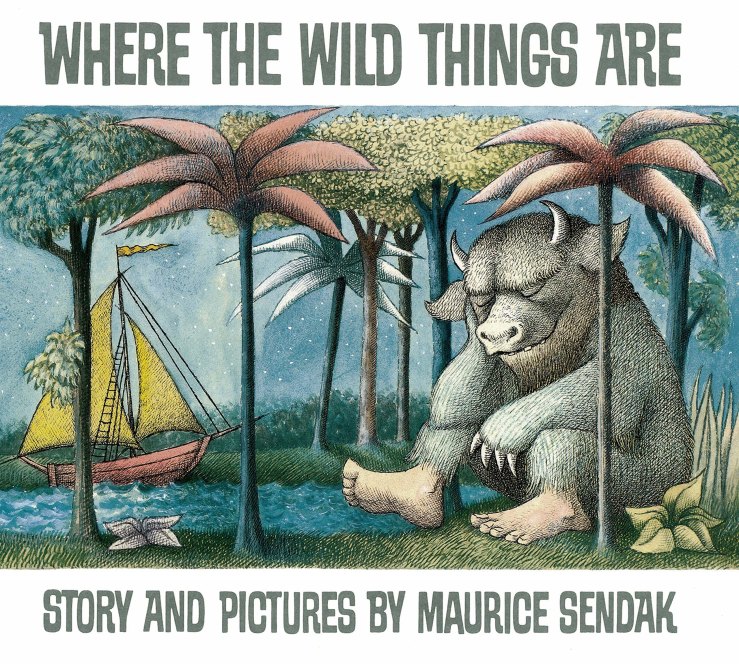
In my previous post, I looked into Arizpe, E. & Styles, M. (2002) study about how children interpret picture books. The authors concluded that children are able to decode clues like surrealism, visual jokes, multiple meanings and inconclusive endings early in life. With this in mind, I went on to analyze ‘Where the wild things are’, Sendak (1963). I wanted to understand some of the storytelling tools Sendak used.
Sendak’s iconic story takes us on a trip through a child’s imagination. The main character is a boy called Max, who is playing around the house dressed like a ‘wild thing.’ After misbehaving, he is sent to his bedroom for the night, without super. But his adventures continue in the bedroom, that becomes a parallel world, where wild things live.
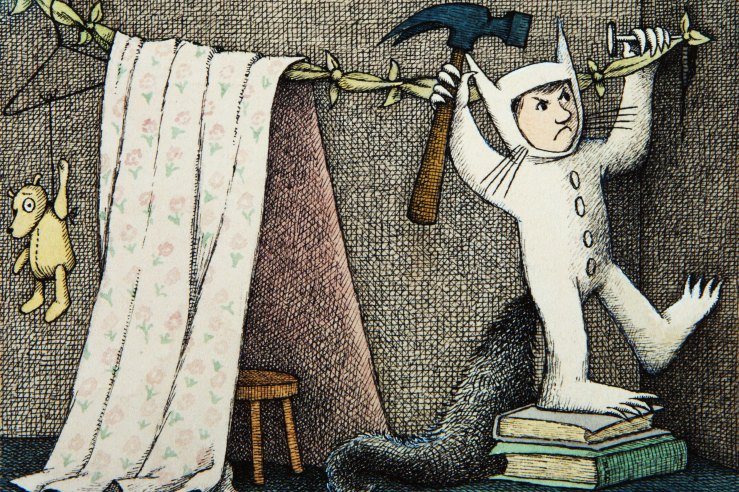
The story begins with literal representations of a child playing around the house (figure 2.), with elements like a costume, a hammer, blankets, books and a stuffed animal.
But after Max is sent to his bedroom after he misbehaves. In his room, the world starts a magical transformation. This transformation is a key moment in the story and is an essential tool that Sendak uses to guide readers through the journey.
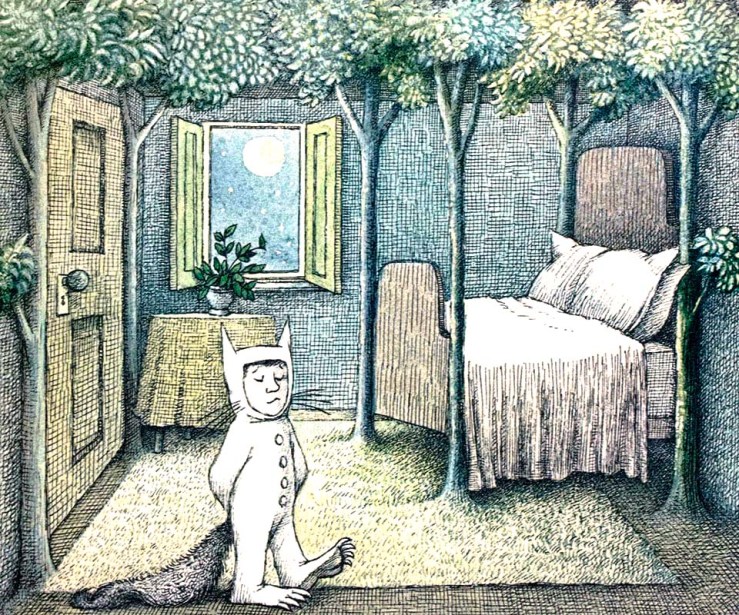
With no given reason, trees start to grow in Max’s room. Sendak uses a brief series of drawings (figures 3 and 4) and 27 words to progressively transform his character’s environment.
‘That very night in Max’s room a forest grew and grew — and grew until his ceiling hung with vines and the walls became the world all around’ (Sendak, 1963)
Max starts to interact with the magical world as the transformation happens, helping it all to seem more natural, and giving readers another element to help make the transition seamless (figure 4).
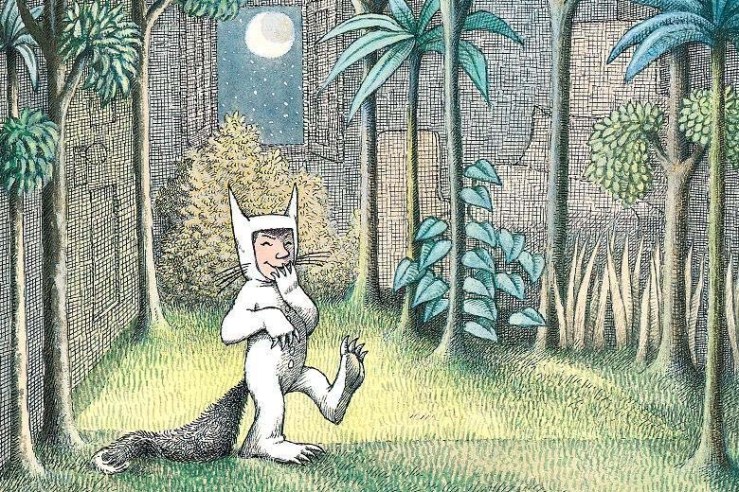
Figure 4. Bedroom transformation, Sendak M. (1963)
From this point on, Sendak progressively abandons literal representations in the story. Max’s character dives into the magical world that he created in his mind and where most of the story takes place. This is how readers are moved to the world where the ‘wild things’ live.
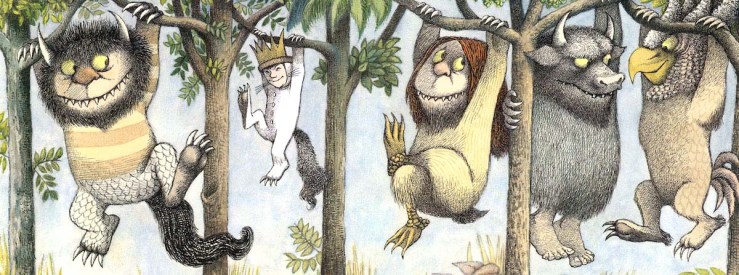
Based on this analysis, we can conclude that it is the progressive visual transition, reinforced by words and actions within the story what allow the surrealism to make sense. The transformation is communicated through a mix of images and words. In addition, Max, the main character, interacts in a natural manner with the magical environment. His interaction reinforces the naturalness of the magic taking place and allows readers to go along in his visit to the place where the wild things are.
*
References:
ARIZPE, E. and STYLES, M. (2002) ‘¿Cómo se lee una imagen? El desarrollo de la capacidad visual y la lectura mediante libros ilustrad.’ Lectura y Vida, 23(3). Available from: http://eprints.gla.ac.uk/50859/ [Accessed: Oct. 27, 2018]
SENDAK, M. (1963) Where the Wild Things Are. New York: HarperCollins; 1 edition (1984).

 Sergio’s research & enquiry